Help prevent cavity-wall claims before they happen
A wind-powered ventilation system with a built-in, inspectable insert, so you can evidence build quality and help prevent claims and re-work from cavity failures.
How Active Moisture Extraction Works
Unlike passive vents that rely on air happening to flow through, Active Vent uses wind-powered negative pressure designed to actively draw moisture out of cavity walls, helping protect your builds and your reputation.
Why are cavity-wall failures a leading cause of new-build claims?
According to the National House Building Council (NHBC), DPCs and cavity trays account for around half of the superstructure defects it sees, with blocked or missing weep vents specifically cited. That's a significant cost to the industry, and to your reputation.
They're passive
They can't actively remove moisture. They rely on air happening to flow through.
They can trap water during rain
Driving rain can push water into cavities rather than letting it escape.
You can't inspect them
Once installed, there is no way to verify what is happening inside the cavity.
Wet insulation kills efficiency
Moisture makes insulation far less effective; damp insulation can let through nearly twice the heat of dry, leading to energy complaints.
The result? Callbacks, complaints, warranty claims, and damage to your reputation. Homeowners blame the builder when their energy bills are high or mould appears, even when you followed all the regulations.
How can you inspect cavity walls after construction is complete?
Once walls are closed up, cavity quality is usually hard to check. Active Vent is designed to help with a patent-pending removable insert.
The removable insert: built-in quality control
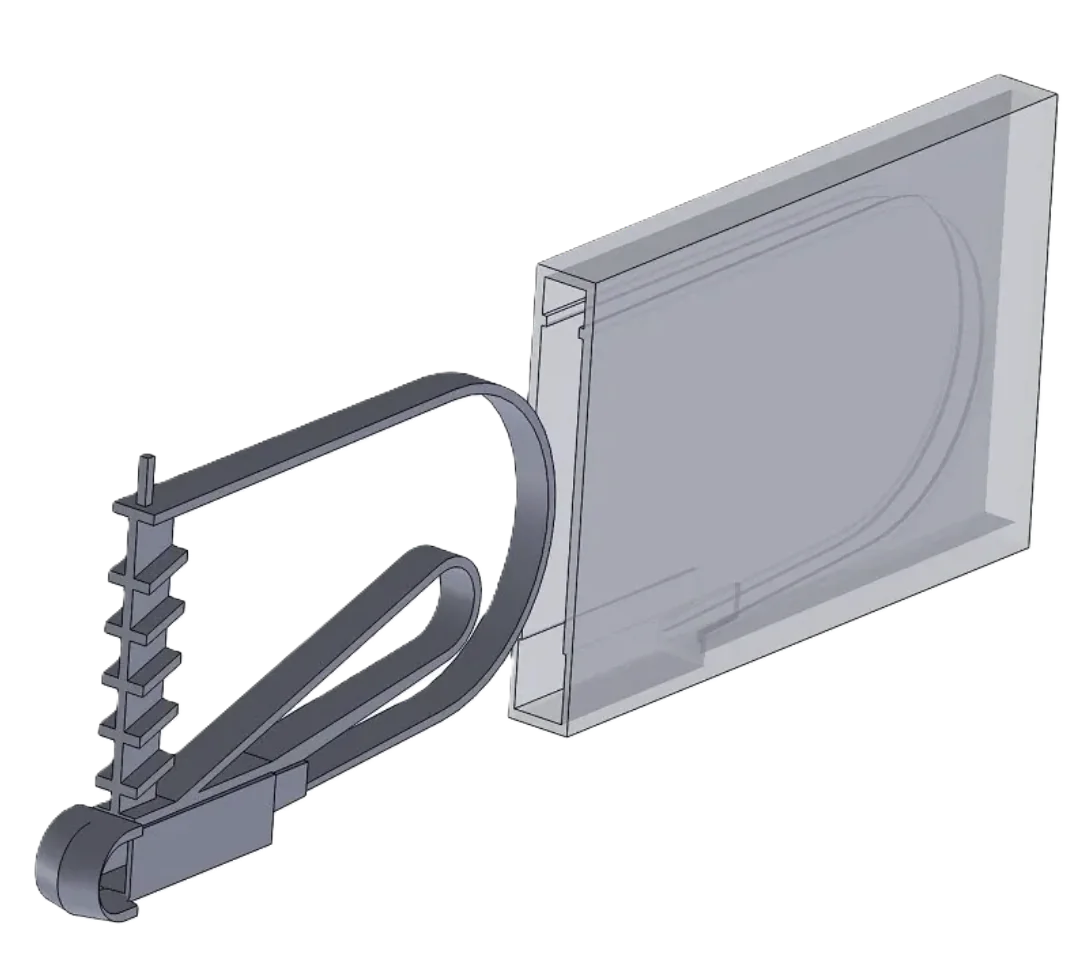
Easy removal
Simply pull out the insert. No tools needed.
Camera inspection
Use an endoscope or inspection camera to view inside the cavity.
Verify & document
Check insulation placement, look for mortar bridges, record what you find.
Reinsert & done
Pop the insert back in and full functionality is restored.
What you can verify:
- Insulation is in place
- No mortar bridges present
- Cavity is clean and dry
- DPC / cavity tray functioning
- No blockages or debris
- Evidence to support Building Regs sign-off
Protect your reputation
Evidence to building control, warranty providers and homeowners that the cavity was built correctly.
Fewer callbacks
Catch issues before handover instead of getting calls years later.
Help prevent claims
Address the cavity failures that drive damp-related claims before they start.
A genuine point of difference
"Our homes feature inspectable cavity ventilation" is a real marketing advantage.
What makes wind-powered active ventilation better than passive vents?
Traditional vents sit there and rely on air happening to flow through. Active Vent harnesses the power of wind to actively pull moisture out, like a vacuum cleaner for your walls.
Three innovations
Wind-powered suction
Uses wind energy to create active suction that draws moisture out of the cavity.
Inspectable insert
Patent-pending removable insert for quality control and inspection after the wall is closed up.
Cross-ventilation
Exchanges air across the cavity, replacing moisture-laden air with fresher air whenever there's wind.
| Feature | Active Vent | Traditional passive vents |
|---|---|---|
| Moisture removal | ✓ Active wind-powered suction | Passive: relies on air movement alone |
| Severe-weather performance | ✓ Continues to work in storms | Can block during driving rain |
| Quality control | ✓ Fully inspectable insert | Sealed, with no way to verify inside |
| Cavity air exchange | ✓ True cross-ventilation | Single-point drainage only |
| Insulation protection | ✓ Helps keep insulation dry | Allows insulation to get wet and underperform |
| Claims risk | ✓ Directly targets a leading defect type | A leading superstructure defect type (NHBC) |
Why should developers care about cavity-wall humidity?
Because wet walls are the hidden energy killer that leads to homeowner complaints, warranty claims, and damage to your reputation.
The wet-insulation problem
When moisture gets into cavity walls it creates interstitial damp (moisture trapped between layers of materials). This soaks into insulation, reducing its effectiveness.
A 2022 laboratory study found that when insulation gets damp it can let through nearly twice the heat of dry insulation, quietly driving up heating bills.
Source: Hayrullin et al., Transportation Research Procedia, 2022
What this means for you:
Homeowner complaints
"My energy bills are sky-high!" Even with proper insulation specified, wet insulation doesn't perform as intended.
SAP / EPC gaps
Predicted energy performance is harder to achieve in practice when cavity insulation gets wet.
Warranty claims
Damp-related issues can trigger warranty calls and expensive remedial work.
Reputation damage
Unhappy homeowners leave poor reviews and describe a "cold, expensive-to-heat" home.
Active Vent's approach
By cross-ventilating the cavity whenever there's wind and replacing moisture-laden air with fresher air, Active Vent is designed to help keep insulation dry so it can perform closer to its rated value. This means:
- Helps insulation perform closer to its rated value by keeping the cavity dry
- Fewer nasty surprises for homeowners on energy performance
- Helps reduce damp-related warranty claims
- Build homes that perform closer to how they were designed
What can Active Vent help you evidence?
Active Vent's removable insert lets you inspect the cavity after the wall is closed up, checking for the rubble, mortar bridges and blocked weep holes that independent BRE/BEIS research identifies as leading causes of cavity-wall damp. Current cavity surveys don't require internal inspection of the cavity base, so this is a genuine quality-control gap the removable insert helps you close.
Why inspection matters
In a BRE/BEIS survey of 390 failed brick cavity dwellings, 20% failed because water could not escape the cavity, caused by rubble or debris at its base. Being able to inspect and clear the cavity base directly addresses a documented cause of failure.
The bottom line
- Fewer callbacks related to cavity dampness
- Evidence to support building-control sign-off
- Documented proof of cavity quality at handover
- A genuine competitive marketing advantage
How easy is Active Vent to install?
Installation is just as simple as traditional vents, but with the added benefit of quality-control verification afterwards.
New builds
- 1 Place Active Vent in the perp joints during bricklaying
- 2 Space at 900mm centres along the DPC (Approved Document C, para 5.5(c)) and, over openings, a maximum of 450mm apart with at least two per opening (NHBC guidance)
- 3 Keep mortar clear of the cavity during bricklaying
- 4 Bonus: inspect the cavity with a camera before final sign-off
Retrofit / remedial
- 1 Chase or chisel out a brick perp joint at the cavity-tray / DPC level (no drilling needed)
- 2 Insert Active Vent flush with the wall surface
- 3 Make good the mortar around the edges
- 4 Bonus: inspect existing cavity condition before sealing
Technical specifications
Dimensions & materials
- Size 10 × 65 × 100mm (W × H × L), fits a standard perp joint
- Material Polypropylene (Crystal Clear: polycarbonate)
- Colours Natural (transparent), Grey, Terracotta, Black, Buff, Crystal Clear, Recycled Black
- Recycled option Recycled Black, 100% recycled polypropylene
Performance & regulations
- Moisture control Wind-powered cross-ventilation; works like a standard vent when there's no wind
- Power None needed: driven by the wind
- Regulations Designed to support Building Regulations Part C and Part F and NHBC guidance
Important note on claims
Where we reference published research or industry statistics (NHBC, BRE/BEIS, Hayrullin et al.), these provide context on cavity-wall failure and moisture and are not specific to our product. Active Vents are designed to support Building Regulations Part C and Part F and NHBC guidance; results may vary depending on installation, property type, and local conditions. Damp has several causes, such as leaks and plumbing faults, and some of them ventilation can't fix.
For full details, see our Data & Claims Disclaimer. Nothing on this page constitutes professional advice or a guarantee of results.
Further reading for developers and builders
- Industry Standards NHBC Cavity Wall Ventilation Requirements: A Practical Guide
What NHBC guidance says about weep holes in cavity walls, why damp walls lose more heat, and how to keep weep vents clear. Written for homeowners, builders and developers.
- Technical Guides Understanding Modern Ventilation Requirements
Why airtight modern homes need better moisture control than ever, what good cavity wall ventilation looks like, and how to avoid trapping damp in your walls.
- Awaab's Law Measuring Awaab's Law Compliance: Metrics and Monitoring
How social landlords can measure Awaab's Law performance: metrics for the 24-hour and 10-working-day timescales, dashboards, sensors and records.
Useful pages
- Installation guide →
Fitting both vents, with spacing based on NHBC guidance.
- Applications →
Where Active Vent is used: homes, commercial buildings, new build and renovation.
- Weep vent calculator →
How many weep vents your home needs, using Approved Document C and NHBC spacing, and what they cost.
- Weep vents compared →
Every UK weep vent type side by side, with prices, spacing rules and when each fits.
Build with ventilation you can inspect
Be one of the first developers to specify Active Vent, helping prevent claims, evidencing quality and building better homes. Need samples or technical specifications? Talk to our team about your development project.