Damp Walls. Streaming Windows. Mould. Tackle the Cause.
Condensation and mould build up when humid air has nowhere to go. Active Vent uses the wind to breathe in and out from a single unit, swapping moisture-laden air for drier outside air in your wall cavity and at your windows. No electricity needed.
Meet the Active Trickle Vent
Streaming windows every morning are a sign that humid air has nowhere to go. A passive trickle vent (or an open window) only lets air in. The Active Trickle Vent uses the power of the wind to draw fresh air in and push stale, humid air out, designed to let moisture leave before it can condense on the cold glass, without throwing your heat out of an open window.
See the Active Trickle Vent →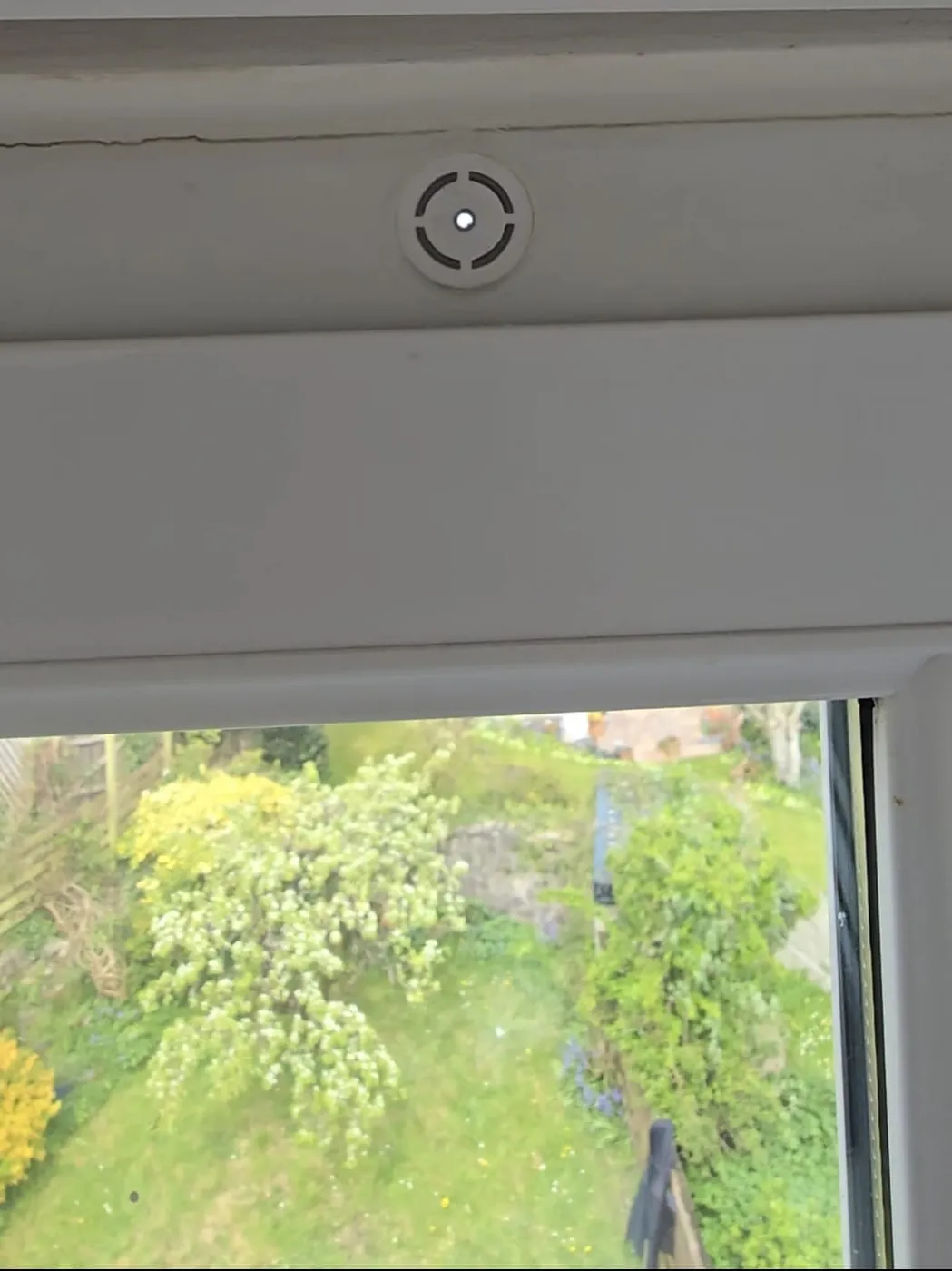
How Active Vent Keeps Your Walls Dry
Simple, effective, and powered by nature. Active Vent harnesses wind energy to move moisture out of your cavity walls, designed to help reduce damp and keep insulation dry.
Why Are Your Energy Bills So High Even Though You Have Insulation?
You're not imagining it. Your heating bills shouldn't be this expensive, especially if your home has cavity wall insulation. The problem? Your insulation might be wet, and wet insulation doesn't work.
The Hidden Energy Killer:
A 2022 laboratory study found that damp insulation can let through nearly twice the heat of dry insulation, because water conducts heat around 25 times more readily than the still air insulation relies on. So wet insulation quietly drives your heating bills up.
Source: Hayrullin et al., Transportation Research Procedia, 2022; standard material thermal properties
How Does Moisture Get In?
- Rain seeping through brickwork
- Humidity from temperature differences
- Condensation (interstitial damp: moisture trapped between wall layers)
- Traditional vents that can't remove it
What Happens When Walls Stay Wet?
- More heat escapes through damp insulation
- Rooms feel cold no matter how high you turn the heat
- Mould and musty smells can appear
- Damp damage can affect your home's value
The Real Cost:
When wet insulation lets more heat escape, your heating has to work harder to keep rooms warm, so you may be paying more than you need to without realising it. How much depends on your home.
How Does Active Vent Keep Your Walls Dry?
Each Active Vent uses the wind to draw drier outside air in through its upper opening and push moisture-laden air out through its lower opening: a local air exchange right at the vent. No electricity needed.
The Active Difference
Wind-Powered
Uses natural wind to drive air in and out of the vent, with no electricity
Cross-Ventilation
Exchanges air across the cavity, replacing moisture-laden air with fresher air
Easy to Check
No running costs, and a removable insert so the vent can be checked and cleaned
The Result?
Drier walls = less damp and mould risk = a warmer, more comfortable home
Traditional Passive Vents:
- Rely on air finding its own way through
- No mechanism to drive moisture out
- Easily blocked by mortar and debris, with no way to check
- Moisture can stay trapped in the cavity
Active Vent:
- Wind-driven air exchange at every vent
- Breathes in and out from one unit
- Removable insert for inspection and cleaning
- Designed to help keep your insulation dry
- No electricity or running costs
What Active Vent Is Designed to Do
Active Vent is designed to help:
- Reduce condensation and damp patches
- Tackle the trapped moisture that feeds mould
- Keep cavity insulation dry so it performs as intended
- Keep rooms feeling warmer in winter
- Improve indoor air quality
- Protect your home from damp damage
Damp has several causes, such as leaks and plumbing faults, and some of them ventilation can't fix. Get those checked first.
How Many Vents Does Your Home Need?
Our vent calculator counts the weep and trickle vents for your home from its walls, windows and doors, shows where they go and prices the packs. Not sure what's causing your damp? Try the damp solution finder first.
The calculator also has an optional "what if" energy scenario. Any savings depend on your property, its current condition and how you use energy, so its results are illustrative only and are not a guarantee of savings.
Is Active Vent Easy to Install in Existing Homes?
Yes. Whether you're building new or upgrading an existing property, the Active Weep Vent fits into a standard perpend (vertical mortar) joint, just like a traditional weep vent. See our full installation guide.
DIY Installation (Existing Homes):
- 1 Locate your existing weep vents or perpend joints just above the DPC, and check for cables or pipes
- 2 Chase or chisel out the perpend joint (no drilling needed) and rake out debris until the opening reaches the cavity
- 3 Push the vent fully into the opening so it sits flush and level with the wall
- 4 Apply a small amount of sealant if needed for a secure fit
Spacing: one vent every 900mm along the DPC (Approved Document C, para 5.5(c)) and, over openings, a maximum of 450mm apart with at least two per opening (NHBC guidance). Optionally, a second, higher row at about 2.1m, also at 900mm centres (roughly one vent per 2m² of wall). We're testing this layout now, so this guidance may change.
Or Hire a Professional:
Any competent builder or handyman can fit Active Weep Vents. It's a straightforward job.
Find a Stockist:
See where to buy Active Vent near you, or ask us and we'll help you find someone to fit it.
Find a Stockist Near YouFull Installation Guide Included
Every order includes detailed instructions, and our team is here to help during opening hours if you have questions.
Further reading for homeowners
- Series guide The Complete Guide to Cavity Wall Ventilation
Why a cavity wall has to be able to breathe, where the moisture comes from, why damp walls quietly waste heat, and how to keep a cavity dry and drained: a plain-English hub for homeowners, builders and surveyors.
- Series guide Getting the Most from Active Vent
A practical hub for choosing, installing, inspecting and maintaining Active Vent, including how the removable, inspectable insert lets you keep a cavity clear over the long term.
- Awaab's Law Awaab's Law Timelines: Investigation and Repair Deadlines
Awaab's Law timescales for significant damp and mould in social housing in England, from the 10-working-day investigation to safety and preventative works.
Useful pages
- Active Weep Vent →
The wind-powered weep vent with a removable insert you can inspect and keep clear.
- Active Trickle Vent →
A wind-powered trickle vent for window frames. No fan, wiring or running costs.
- How cross-ventilation works →
Where cavity moisture comes from and why airflow, not sealing, is what keeps a wall dry.
- Damp solution finder →
A few quick questions, then a plan: the likely cause, what to fit, where and what it costs.
Tackle Trapped Moisture
Active Vent is designed to help reduce the trapped moisture behind damp, condensation and mould, and to help keep your insulation working.
Questions? Check our FAQ or call 01792 002497