The world's first wind-powered, cross-ventilating vent (patent pending)
Active Vent uses the wind to ventilate wall cavities in both directions, drawing fresher air in and letting moist air out. It is designed to help reduce moisture build-up in the cavity, and it uses no electricity to run.
How Active Moisture Extraction Works
Our patent-pending, wind-powered design creates suction that draws moisture out of cavity walls. It is an active vent, a different category from one-way passive vents.
A Vent That Breathes In and Out
Standard weep vents drain by gravity and natural airflow. Our patent-pending cross-ventilating design uses the wind to draw fresher air into the cavity and let moist air out, so cavity air is exchanged rather than left to sit.
Dew Point Condensation in the Cavity
When moist air in a cavity cools to its dew point, water condenses on the surfaces inside, including insulation.
When cavity wall humidity reaches dew point temperature, moisture condenses directly onto insulation, causing:
Reduced insulation effectiveness
In laboratory tests, damp insulation let through about 1.9× the heat of dry insulation (Hayrullin et al., 2022)
More heat lost through wet walls
Every 1% rise in masonry moisture can raise its thermal conductivity by about 5% (Ismaiel et al., 2022)
Water reaching the inner leaf
BRE defines a failed cavity wall as liquid water arriving at the inner leaf (BRE / BEIS 2021/017)
Active Vent's cross-ventilation is designed to help reduce humidity in the cavity, so there is less moisture available to condense. Sources: Hayrullin et al., 2022; Ismaiel et al., Journal of Building Physics, 2022; BRE / BEIS 2021/017.
Wind-Powered Extraction
Our patent-pending design uses the wind to create suction that draws water and moist air out of the cavity. At 0mph it works like a standard vent; once the wind picks up, it ventilates actively, and it works harder as the wind speed rises.
Removable, Inspectable Insert
The Active Vent has a removable insert (patent pending), so you can inspect periodically; the removable insert makes it quick to check and clear. Builders and surveyors can see that the cavity behind the vent is clear, a check that BRE notes current cavity-insulation surveys do not require.
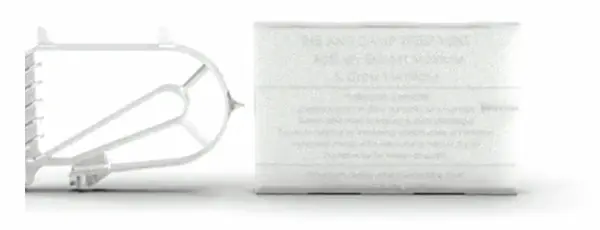
The removable insert allows for easy inspection and cleaning without tools
Cross-Ventilating Design (Patent Pending)
Our cross-ventilating design draws fresher air into the cavity and lets moist air out, so air in the cavity is exchanged rather than left to sit. It is designed to help reduce the moisture that builds up in wall cavities. Damp has several sources, such as leaks and plumbing, that vents can't fix.
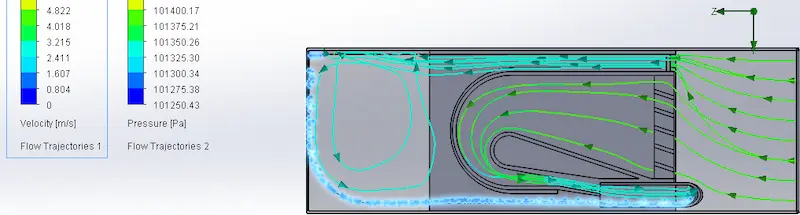
Illustrative diagram of air moving through the cavity
How it performed in our side-by-side tests
We put standard weep vents, open weep holes and the Active Weep Vent side by side in the same wet test cavity. From around 20mph the standard vents and weep holes stopped draining, while the Active Weep Vent kept drawing water out, and drew out more as the wind speed rose.
Why it matters: the National House Building Council (NHBC) reports that DPCs and cavity trays account for around half of the superstructure defects it sees, with blocked or missing weep vents specifically cited (NHBC Technical Extra 18).
- At 0mph it works like a standard vent
- Once the wind picks up, it ventilates actively, and it works harder as the wind speed rises
- Cross-ventilation exchanges moist cavity air with fresher air
Technical Specifications
Key facts about the Active Weep Vent.
Materials & Construction
- Main Body Material: UV-Resistant Plastic
- Grating: Insect & Rodent Resistant
- Internal Frame: Removable for Maintenance
- Manufacture: Made in Cardiff by an ISO 9001-certified manufacturer
- Recycled option: Recycled Black, 100% recycled polypropylene
Performance Metrics
- At 0mph: Works like a standard vent
- As the wind picks up: Ventilates actively, working harder as wind speed rises
- Power: Uses no electricity to run
- Inspection: Inspect periodically via the removable insert
Why Wet Walls Lose More Heat
Published research shows that moisture makes insulation and masonry conduct more heat. Product-specific energy savings haven't been measured yet, so we don't quote them.
What the research says
In laboratory tests, rock wool insulation with about 5% moisture by weight had a thermal conductivity up to about 94% higher than when dry, so damp insulation can let through about 1.9× the heat of dry insulation. (Source: Hayrullin et al., Transportation Research Procedia 63, 2022)
- ›Water conducts heat about 25× more readily than still air (about 0.6 vs 0.024 W/(m·K))
- ›Every 1% rise in masonry moisture can raise its thermal conductivity by about 5% (Ismaiel et al., Journal of Building Physics, 2022)
What this could mean for your home
If damp is reducing your insulation's performance, keeping the cavity drier could reduce heat loss. Product-specific savings haven't been measured yet, and a home whose walls are already dry may see no change.
- ›Active Vent uses no electricity to run
- ›Damp has several sources, such as leaks and plumbing, that vents can't fix
- ›Try your own figures in the "what if" energy scenario in our weep vent calculator, which uses Ofgem and UK government data
How Active Vent Differs from One-Way Passive Vents
Active Vent is an active, wind-powered vent, a different category from one-way passive vents, so this is not a like-for-like comparison. The test result is from our own testing.
| Feature | One-way passive vents | Active Vent |
|---|---|---|
| Our own side-by-side tests, from around 20mph | The other weep vents we tested did not let water out of the test cavity | Let water out of the test cavity |
| How air moves | One-way, passive opening | Wind-powered, cross-ventilating: air in and out |
| Response to wind | Passive | Works like a standard vent at 0mph; ventilates actively as the wind picks up |
| Electricity needed | None | None |
Why Cavity Moisture Matters
Water that can't escape a cavity wall is a recognised cause of damp. Here is what published research says, and what Active Vent is designed to do about it.
Note: The statistics below come from published research on cavity walls and damp in general. They are not Active Vent results. Sources: NHBC, BRE / BEIS, WHO.
A common defect
The National House Building Council (NHBC) reports that DPCs and cavity trays account for around half of the superstructure defects it sees, with blocked or missing weep vents specifically cited.
- •BRE: in a survey of 390 failed brick cavity homes, 20% failed because water could not escape the cavity
- •BRE names blocked cavity weep holes as a wall-failure mechanism
Why dry cavities matter
The World Health Organization found sufficient evidence that occupants of damp or mouldy buildings are at increased risk of respiratory symptoms, infections and worsening asthma. Wet walls also lose more heat.
- •Active Vent is designed to help reduce moisture build-up in the cavity
- •Damp has several sources, such as leaks and plumbing, that vents can't fix
Greener by design
Active Vent uses no electricity to run. Product-specific energy and carbon savings haven't been measured yet, so we don't quote them.
- •Manufactured in Cardiff, about 30 minutes from our Swansea base, which keeps transport miles low
- •Recycled Black option made from 100% recycled polypropylene
- •Uses the wind, not a fan or a plug
Research & Development
Active Vent's design is patent pending.
The Active Vent came out of research into how water and moist air get trapped in cavity walls. Standard vents rely on gravity and natural airflow. Active Vent's design adds wind energy, using it to create suction that draws moisture out of the cavity, and it exchanges moist cavity air for fresher air: not just water, but moisture-laden air.
Our own tests bear this out: at around 20mph, water stopped coming out of the standard weep vents and weep holes, but kept coming out of the Active Weep Vent, and the faster the wind, the better it performed.
It is manufactured in Cardiff by an ISO 9001-certified manufacturer, and distributed from our base in Swansea.
How cross-ventilation helps with damp
Where cavity-wall moisture comes from, how trapped humid air migrates, and why airflow matters.
Read the science → The researchThe evidence, every claim a real source
The published research behind Active Vent: English Housing Survey, WHO, UK Building Regulations and the BRE/BEIS cavity-wall study.
See the evidence →Important Disclaimer
Performance statements about Active Vent on this site are based on our own in-house testing. Where we reference published research or industry statistics, these are for context only and not specific to our product. Product-specific energy and carbon savings haven't been measured yet.
Active Vents are designed to support Building Regulations Part C (cavities) and Part F (ventilation) and NHBC guidance. We do not claim CE marking, BBA certification or EN standard compliance. Active Vents are manufactured in Cardiff by an ISO 9001-certified manufacturer.
Statements about regulations are based on our interpretation of published standards and our product's design. Results may vary depending on installation, property type, and local conditions.
For full details, see our Data & Claims Disclaimer.
Nothing on this site constitutes professional advice or a guarantee of results. Please consult a qualified professional for specific compliance or installation questions.
Further reading
- Series guide The Complete Guide to Cavity Wall Ventilation
Why a cavity wall has to be able to breathe, where the moisture comes from, why damp walls quietly waste heat, and how to keep a cavity dry and drained: a plain-English hub for homeowners, builders and surveyors.
- Technical Guides Understanding Modern Ventilation Requirements
Why airtight modern homes need better moisture control than ever, what good cavity wall ventilation looks like, and how to avoid trapping damp in your walls.
- Awaab's Law Awaab's Law Record-Keeping: A Defensible Compliance Trail
How social landlords can build a clear Awaab's Law record trail: what to log at each stage, the 3-working-day written summary and keeping tenants updated.
Useful pages
- How cross-ventilation works →
Where cavity moisture comes from and why airflow, not sealing, is what keeps a wall dry.
- Benefits →
What the design is built to do, with the published research behind it.
- The evidence →
The independent research behind our approach, with every source linked.
- Damp solution finder →
A few quick questions, then a plan: the likely cause, what to fit, where and what it costs.
See the technology at work
Buy the Active Vent range online, or talk to us about the right wind-powered vent for your project: cavity, window or a whole property.