Weep vents compared: types, uses and how to choose
Weep vents sit in the joints at the bottom of a cavity wall and above windows and doors. They have two jobs: letting water out of the cavity and letting air in to dry it. Not every type does both. This guide compares the main types sold in the UK, what each is for, what it costs and where each one is the sensible choice.
Quick answer
Which weep vent is best?
The best weep vent lets water out, keeps air moving and can be checked. For most homes, we'd pick the Active Weep Vent. It uses the wind to pull water and damp air out, and its insert comes out for cleaning.
- Best for most homes: Active Weep Vent (about £90 for a whole house)
- Cheapest: basic plastic weep vent, for sheltered walls that only need drainage
- Fire-rated (A1) walls: metal weep vent
- Spacing: 450mm centres on cavity trays and lintels, with at least two over each window and door, and 900mm centres along the damp-proof course (DPC)
What are weep vents for?
Rain driven against a brick wall soaks into the outer leaf, and some of it runs down the inside face into the cavity. Cavity trays and damp-proof courses catch that water. Weep vents are the way out.
Drainage: letting water out
Water collected on a tray or lintel has to escape through the outer leaf, or it can build up and find a way to the inner wall. NHBC puts it plainly: "In prolonged periods of driving rain, water will penetrate the outer leaf of a masonry wall", so trays, DPCs and weep vents should be installed in line with its guidance.
Ventilation: letting air dry the cavity
Air moving through the cavity carries moisture away and helps wet masonry dry. Some weeps are sold for drainage only; others are sold to drain and ventilate, and state a free airflow area. Cavity Trays, for example, lists its drainage weeps separately from its weep-ventilators.
How many weep vents do you need, and where?
- At the base of the cavity: Approved Document C, para 5.5(c), says a damp-proof tray should be provided with "weep holes every 900mm to assist in the transfer of moisture through the external leaf". Where the tray doesn't run the full length of the wall, such as above an opening, "stop ends and at least two weep holes should be provided". Approved Document C
- Over windows and doors: NHBC Standards 6.1 says that where fairfaced masonry is supported by lintels, weep holes should be "at a maximum of 450mm intervals" and "each opening should have at least two weep holes". NHBC Standards 6.1
- Inserts with less open area: LABC's Technical Manual says weep holes go at no more than 900mm centres, and that where a proprietary insert's equivalent open area is less than an open perpend's, the installation centres should be reduced accordingly. LABC Technical Manual v11, 6.1.9
Work out the number for your own walls with our weep vent calculator: it applies these spacing rules to your wall length, windows and doors, and prices the packs. Not sure what's causing your damp? Start with the damp solution finder.
How does wind-driven rain get through a weep vent?
In 1963 G.K. Garden of the National Research Council of Canada set out the four forces that move rain through openings in a wall. The framework is still the standard way to think about it.
Droplet momentum
Raindrops carried by the wind can be thrown straight through an opening.
Capillarity
Fine gaps and porous materials draw water in by surface tension.
Gravity
Water runs downhill, inwards if a joint or surface slopes that way.
Air-pressure difference
Wind raises the pressure on the outside face, and air moving inwards carries water with it.
Garden says baffles, interlocks and labyrinths "can be used to advantage at joints to control rain penetration from kinetic energy". The pressure difference is dealt with differently: by "providing sufficient free area of opening to the exterior to allow the wind pressure to maintain equalization". NRC CBD-40
Our view, as the manufacturer
Wind pressure at the outside face is the problem
Wind striking the outside face of a vent creates pressure that can hold water back in the cavity. We call this the "plug effect".
Internal baffles can help with rain droplets, but they don't address wind pressure at the outside face, and they reduce free area.
That's why the Active Weep Vent is designed to redirect the wind to create suction instead, so the wind helps draw air and water out rather than pushing against them.
We also think cross-ventilation should be the test a weep vent is judged by. A passive vent on one face of a house can only move air if that air has somewhere to go: round to another face, or up to the loft and out through a roof vent. That depends on a chain of other vents and open paths, and any one of them being blocked by insulation, cavity barriers, debris or a closed vent stops it working. Each Active Weep Vent is designed to bring air in and take it out at the same point, so it doesn't rely on that chain.
What the research does and doesn't show
- Baffles address droplet momentum; pressure difference is handled by equalisation and free area (Garden, CBD-40).
- Screens reduce open area. LABC says screened inserts have a lower equivalent open area, so fit them closer together (LABC v11, 6.1.9).
- The vent is the bottleneck. "In wall systems with discrete vents (e.g., masonry veneers), the vents themselves impose most of the resistance to airflow. Increasing the vent area results in a directly proportional increase in the airflow." (Straube & Burnett, 1998)
- Top and bottom vents dry better. Field tests found that having brick vents at both the top and the bottom of the wall was clearly beneficial to drying (ASHRAE RP-1019, 2004)
- Both Straube studies looked at North American brick veneer on timber frame, not UK masonry cavity walls. We found no published UK or EU test of rain ingress or drainage through weep vents under wind pressure, and no independent comparison of baffled and unbaffled weeps.
What types of weep vent are there?
Eight types, judged on what matters in a real wall: do they keep water and damp air moving out, even in a storm, and can you check and maintain them? Prices are per vent, excluding VAT unless stated, as listed by UK merchants in October 2026, and they change often. Active Vent is not VAT registered, so no VAT is added to our prices.
Active Weep Vent
Active: wind-powered extraction and cross-ventilation
- ✓ Lets water out of the cavity
- ✓ Actively draws moisture out, rather than waiting for water to build up and trickle out
- ✓ Keeps letting water out when the wind hits the wall in a storm1
- ✓ Designed to swap air in and out at the vent itself, without relying on a path to other vents
- ✓ Resists wind-driven rain coming in2
- ✓ Keeps out insects and debris
- ✓ Comes out so you can check for blockages, nests and debris
- ✓ Lets the homeowner maintain it over the years
- ✓ Can be taken out while rendering, pointing or painting, with no masking
Price per vent: £1.60–£2.40 (no VAT added)
Open perpend
Passive: drains by gravity
- ✓ Lets water out of the cavity
- ✗ Actively draws moisture out, rather than waiting for water to build up and trickle out
- ✗ Keeps letting water out when the wind hits the wall in a storm1
- ✗ Designed to swap air in and out at the vent itself, without relying on a path to other vents
- ✗ Resists wind-driven rain coming in2
- ✗ Keeps out insects and debris
- ✗ Comes out so you can check for blockages, nests and debris
- ✗ Lets the homeowner maintain it over the years
- ✗ Can be taken out while rendering, pointing or painting, with no masking
Price per vent: Free (labour only)
Standard plastic
Passive: drains by gravity
- ✓ Lets water out of the cavity
- ✗ Actively draws moisture out, rather than waiting for water to build up and trickle out
- ✗ Keeps letting water out when the wind hits the wall in a storm1
- ✗ Designed to swap air in and out at the vent itself, without relying on a path to other vents
- ~ Resists wind-driven rain coming in2
- ✓ Keeps out insects and debris
- ✗ Comes out so you can check for blockages, nests and debris
- ✗ Lets the homeowner maintain it over the years
- ✗ Can be taken out while rendering, pointing or painting, with no masking
Price per vent: 26p–54p
Drainage-only
Passive: drainage only
- ✓ Lets water out of the cavity
- ✗ Actively draws moisture out, rather than waiting for water to build up and trickle out
- ? Keeps letting water out when the wind hits the wall in a storm1
- ✗ Designed to swap air in and out at the vent itself, without relying on a path to other vents
- ~ Resists wind-driven rain coming in2
- ~ Keeps out insects and debris
- ✗ Comes out so you can check for blockages, nests and debris
- ✗ Lets the homeowner maintain it over the years
- ✗ Can be taken out while rendering, pointing or painting, with no masking
Price per vent: From about 35p
Insect mesh
Passive: drains by gravity
- ✓ Lets water out of the cavity
- ✗ Actively draws moisture out, rather than waiting for water to build up and trickle out
- ? Keeps letting water out when the wind hits the wall in a storm1
- ✗ Designed to swap air in and out at the vent itself, without relying on a path to other vents
- ~ Resists wind-driven rain coming in2
- ✓ Keeps out insects and debris
- ✗ Comes out so you can check for blockages, nests and debris
- ✗ Lets the homeowner maintain it over the years
- ✗ Can be taken out while rendering, pointing or painting, with no masking
Price per vent: 26p–54p
Baffled
Passive: drains by gravity
- ✓ Lets water out of the cavity
- ✗ Actively draws moisture out, rather than waiting for water to build up and trickle out
- ? Keeps letting water out when the wind hits the wall in a storm1
- ✗ Designed to swap air in and out at the vent itself, without relying on a path to other vents
- ✓ Resists wind-driven rain coming in2
- ✓ Keeps out insects and debris
- ✗ Comes out so you can check for blockages, nests and debris
- ✗ Lets the homeowner maintain it over the years
- ✗ Can be taken out while rendering, pointing or painting, with no masking
Price per vent: 26p–55p
Concealed tube
Passive: drains by gravity
- ✓ Lets water out of the cavity
- ✗ Actively draws moisture out, rather than waiting for water to build up and trickle out
- ? Keeps letting water out when the wind hits the wall in a storm1
- ✗ Designed to swap air in and out at the vent itself, without relying on a path to other vents
- ✓ Resists wind-driven rain coming in2
- ✓ Keeps out insects and debris
- ✗ Comes out so you can check for blockages, nests and debris
- ✗ Lets the homeowner maintain it over the years
- ✗ Can be taken out while rendering, pointing or painting, with no masking
Price per vent: 32p–43p
Metal (A1)
Passive: drains by gravity
- ✓ Lets water out of the cavity
- ✗ Actively draws moisture out, rather than waiting for water to build up and trickle out
- ? Keeps letting water out when the wind hits the wall in a storm1
- ✗ Designed to swap air in and out at the vent itself, without relying on a path to other vents
- ? Resists wind-driven rain coming in2
- ? Keeps out insects and debris
- ✗ Comes out so you can check for blockages, nests and debris
- ✗ Lets the homeowner maintain it over the years
- ✗ Can be taken out while rendering, pointing or painting, with no masking
Price per vent: £2.32–£2.40
Key: ✓ yes · ~ partly · ✗ no · ? not published or not yet tested. Ticks reflect what each type is designed and sold to do, from the makers' published information.
1 From our own side-by-side tests at wind speeds of around 20mph and above: the standard plastic weep vents and open perpends we tested held water in the cavity, while the Active Weep Vent kept drawing it out. We haven't tested the other types yet, so they show "?". See our own test.
2 Rain-resistance ticks for baffled and concealed weeps are the makers' claims; we found no published test results.
The stronger the wind, the stronger the suction
What makes the Active Weep Vent different
Ordinary weep vents are passive. Water has to build up on the tray and trickle out by gravity, and when the wind hits the wall in a storm it can hold that water in, just when the cavity is taking on the most water.
The Active Weep Vent turns that same wind into suction. Wind passing through the vent creates low pressure that draws damp air and water out of the cavity, while fresh air comes in at the same vent. The harder the wind blows, the harder it pulls moisture out, so it works hardest in a storm, exactly when the cavity needs it most.
And its insert pulls out, so builders, inspectors and homeowners can check it, clear it and keep it working for years.
More about each type
How each one works, what it's best for, what to watch out for, and examples with the makers' and merchants' published figures. Free-area figures are manufacturers' statements, not our measurements.
Active Weep Vent Active: wind-powered extraction and cross-ventilation
- How it works
- Wind passing through the vent creates low pressure that draws damp air and water out of the cavity through a separate channel, while fresh air comes in. The harder the wind blows, the harder it pulls moisture out, so it works hardest in a storm, exactly when the cavity needs it most. The insert pulls out, so the vent can be checked, cleared and maintained. Size 10 × 65 × 100mm, fitted in a chased-out perpend.
- Typical price per vent
- £1.60–£2.40 per vent in packs (10 for £24, 50 for £90, 100 for £160). No VAT is added: Active Vent is not VAT registered.
- Stated free area
- To be published
- Best for
- Any cavity wall, and especially exposed walls, damp-prone cavities, rented homes that need vents you can inspect, and new builds where trades want to take vents out while rendering or painting.
- Watch-outs
- Costs more per vent than a basic plastic weep. In still air it drains like a standard vent; the wind is what makes it active.
Open perpend (no insert) Passive: drains by gravity
- How it works
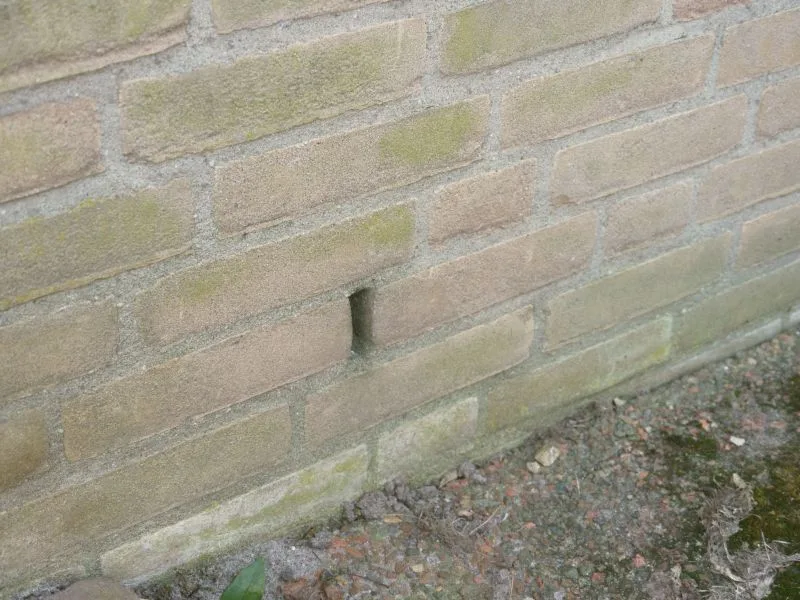
- Mortar is left out of a vertical (perpend) joint, leaving an open slot roughly 10 × 65mm.
- Typical price per vent
- £0 (labour only)
- Stated free area
- About 650 mm² gross opening (our arithmetic from 10 × 65mm, not a published figure)
- Best for
- Timber-frame walls, where LABC says open perpends should be used; simple, low-cost builds.
- Watch-outs
- Nothing stops insects, debris or mortar getting in, and a slot can be pointed up by mistake. BRE's parapet guidance prefers proprietary weep slots or tubes in exposed locations.
Standard plastic weep (drain and vent) Passive: drains by gravity
- How it works
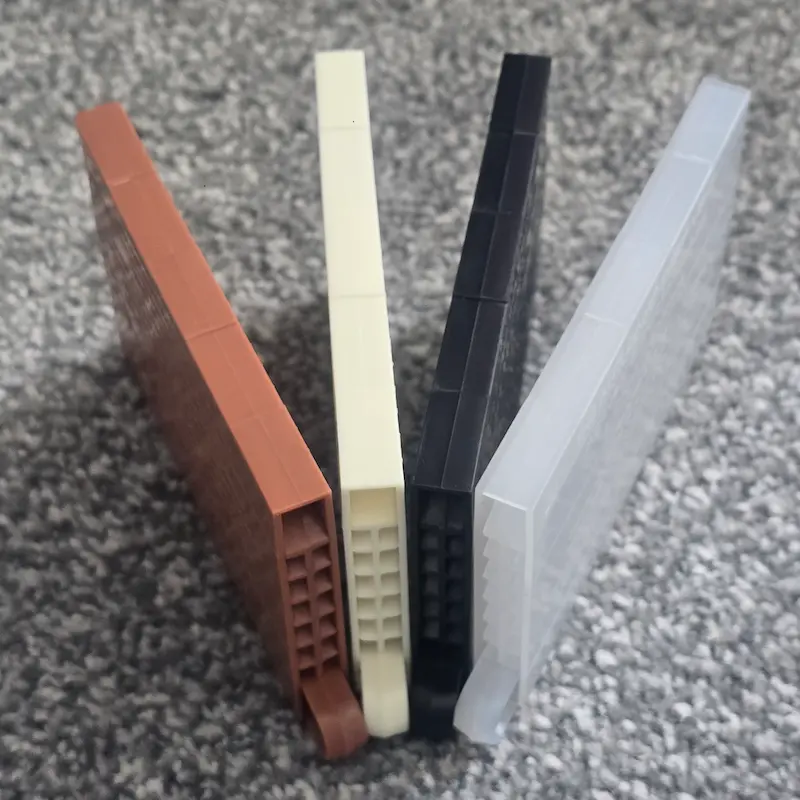
- A hollow polypropylene box about 65 × 10 × 100mm, set in the perpend on the tray or lintel, with a front grille (often about 4mm) against large insects.
- Typical price per vent
- About £0.26–£0.54
- Stated free area
- 165–220 mm² (manufacturer stated)
- Best for
- Most new-build and repair work where cost matters and the wall is reasonably sheltered.
- Watch-outs
- Stated free area is roughly a quarter to a third of an open perpend's gross opening (our arithmetic). Grilles can block. LABC says that where an insert's open area is lower, centres should be reduced.
- Examples
- Timloc 1143: 165 mm² free area; £0.26 to £0.54 each. Source: Timloc, Howarth Timber, lintels.co.uk
- Manthorpe weep vent (G950): 220 mm²; £15.40 inc VAT per 50 (about £0.31 each). Source: Roofing Supplies UK
Drainage-only weeps (beak, pyramid, telescopic) Passive: drainage only
- How it works
- Small outlets at the tray or lintel that let water out. They are sold as weeps rather than ventilators. Telescopic versions slide forward to clear render.
- Typical price per vent
- From about £0.35 (telescopic, pack of 100)
- Stated free area
- Not published on the pages we checked
- Best for
- Draining trays and lintels where ventilation is not the aim. Telescopic types suit rendered walls and outer leaves thicker than 100mm.
- Watch-outs
- Not sold for ventilation, so don't expect them to help the cavity dry by airflow.
- Examples
- Cavity Trays lists Beak Weep, Pyramid Weep and Small Adjustable Telescopic Weep as drainage weeps, separately from its weep-ventilators. Source: Cavity Trays
- Small Adjustable Telescopic Weep: 93 × 24 × 9.5mm, "additional 70mm of extension"; £34.83 per 100. Source: Roof Giant
Insect-mesh and grille weeps Passive: drains by gravity
- How it works
- A grille or mesh across the face keeps out insects and nesting animals. In the UK this is usually an integral 4mm grille on a plastic weep; separate brush or fibre-mesh inserts are mainly a North American product.
- Typical price per vent
- Usually the same products as standard plastic weeps; no UK listing found for separate mesh inserts
- Stated free area
- Lower than an open perpend (see the standard and baffled rows for stated figures)
- Best for
- Walls where bees, wasps or birds have been a problem.
- Watch-outs
- Screens reduce the open area, so LABC says to fit screened inserts at closer centres. Designing Buildings Wiki notes that pest and rain devices can stop a weep giving the airflow needed to ventilate the cavity.
Baffled weeps Passive: drains by gravity
- How it works
- An insect grille on the face plus internal baffles that create a labyrinth path, marketed against wind-driven rain.
- Typical price per vent
- About £0.26–£0.55
- Stated free area
- 220–320 mm² (manufacturer stated)
- Best for
- Where the specifier wants a product marketed for driving-rain resistance. LABC says weep holes in exposure zones 3 and 4 should be designed to prevent ingress of wind-driven rain.
- Watch-outs
- No test method or result for wind-driven rain was published on the manufacturer pages we opened. Baffles take up free area and can collect debris.
- Examples
- Cavity Trays Type W: "Free airflow 320mm²"; £24.00 per 50 to £0.55 each. Source: Cavity Trays, SureCav, Selco
- Cavity Trays Euroweep-vent: "approximately 300mm²". IG Lintels weep vents: about 300 mm². Source: Cavity Trays, IG Lintels
- Glidevale Protect MV650: 220 mm²; £12.99 per 50. Source: BPD Store
Concealed and extension-tube weeps Passive: drains by gravity
- How it works
- A slim, tapered weep with a small outlet on the face, designed to look neat. Extension tubes reach through render or a wider outer leaf (Timloc's is 6mm across). Water drains out by gravity. It doesn't use the wind to draw water or air out of the cavity.
- Typical price per vent
- About £0.32–£0.43
- Stated free area
- Not published on the pages we checked
- Best for
- Premium or heritage facades where a visible vent would spoil the look, and rendered walls.
- Watch-outs
- The small outlet suggests little ventilation value (no free area was published on the pages we checked).
- Examples
- Timloc Invisiweep: 102 × 65 × 10mm; IW500EX extension tube 500mm × 6mm dia; £0.43 each, or £15.96 per 50. Source: Timloc, Bradfords, My Trade Products
- Rytons Rytweep: drainage weep, fitted "at approximately every fourth brick". Source: Rytons
Metal (A1 non-combustible) weeps Passive: drains by gravity
- How it works
- Diecast or metal weeps, usually concealed or tapered, for walls where non-combustible materials are needed.
- Typical price per vent
- About £2.32–£2.40
- Stated free area
- Not published on the pages we checked
- Best for
- Buildings where the fire strategy calls for non-combustible components in the external wall. Check Approved Document B with your designer.
- Watch-outs
- Roughly 5 to 8 times the price of a plastic weep.
- Examples
- Timloc Invisiweep NC: £116.22 + VAT per 50 (£2.32 each). Source: Fixfirm
- Rytons A1 Metal Rytweep: £120.00 per 50 (£2.40 each). Source: Rytons, Trade Superstore Online
An open 10 × 65mm perpend is about 650 mm² of gross opening; that is our own arithmetic, not a published figure. We found no other UK weep vent designed to use the wind to draw water and air out of the cavity.
Why it's different
Why the Active Weep Vent does more than drain
It keeps water moving out in a storm
Cavity walls are most at risk of water getting in during prolonged storms, when driving rain saturates the bricks and masonry and finds its way through cracks (even hairline ones), drilled holes and gaps. NHBC puts it plainly: "In prolonged periods of driving rain, water will penetrate the outer leaf of a masonry wall."
In our view, the cavity tray usually isn't the problem. The problem is that the water can't get out: the wind hitting the face of a standard vent forms a virtual plug, pushing any water trying to escape back in and holding it there. Because that pressure builds at the outside face, we don't believe any internal baffle can change it.
Other manufacturers recognise the problem too. Cavity Trays notes that "wind pressure can prevent evacuation and cause water to be trapped, potentially overwhelming the DPC / tray system within the wall" (Cavity Trays, What is a weep vent?). Their answer is a shaped outlet. The Active Weep Vent's outlet is shaped to resist the wind too, but it goes further: it uses the wind's own force against itself, turning it into suction that pulls the water out.
In our own tests, standard weep vents and open perpends held water in at wind speeds of around 20mph and above, while the Active Weep Vent kept drawing it out. The faster the wind, the more water it drew out.
What we saw happen to trapped water
On our test rig, as the wind speed rose, the water level built up inside the cavity behind the standard vents and open perpends. Then one of three things happened:
- If the tray held, the water built up until its weight overcame the wind and it gurgled out in bursts.
- Or the water rose over the side walls of the tray.
- Or it tracked along the damp-proof course until it found a weakness, where it can get in, or reach the insulation and structural parts of the wall.
The removable insert
Built to be checked, cleared and maintained
Engineered to protect and built to last, the Active Weep Vent lets developers and inspectors check a detail that's usually hidden behind brickwork, clear mortar droppings and debris, and keep it maintained for years.
Most weep vents are fitted and forgotten. If they block, nobody knows. On a recent job at a semi-detached house in Dunvant, Swansea, every weep vent on the property was a standard plastic vent with a grille, and every one was blocked by insect nests. When it rained, water ran onto the cavity trays, couldn't get out, and tracked its way inside the home. Finding and fixing the blockages meant taking out bricks. With Active Weep Vents, we could simply have pulled out each insert, checked it, cleaned it and put it back.
- During the buildBricklayers and inspectors can clear mortar droppings and check each vent is open to the cavity.
- For tradesRenderers, pointers and decorators can take the insert out instead of masking and detailing around each vent. In our experience that saves around a minute per vent, close to an hour on a typical house.
- For homeownersA quick check for nests, leaves and debris, so problems are found before they reach the inside of the house.
The problems you can't see
Water trapped in a cavity doesn't always show up as a damp patch inside the home. It can soak the insulation and make it far less effective: research found wet mineral-wool insulation can let through around twice the heat of dry insulation (Hayrullin et al., 2022). The wall can stay wet with no visible sign of damp, which encourages mould and poorer indoor air. Damp and mouldy homes are linked to respiratory infections and worsening asthma (WHO). Many people live with this without knowing, because it just seems normal for their home.
Cross-ventilation at every vent
A passive vent only moves air if there's a clear path to other vents around the house or up through the loft. Each Active Weep Vent is designed to bring fresh air in and take damp air out at the same point, so it doesn't depend on that chain. Why that matters.
The cost question
Is an Active Weep Vent worth the extra cost?
Yes, the Active Weep Vent costs more than a basic plastic vent, because it does a lot more. And you only buy them once. For a whole house (most need 40 to 50 vents), it works out at around £70 more in total. For an extension, a pack of 10 is around £20 more. Here's what that buys you:
- Active cross-ventilation at every vent, powered by the wind, with no electricity.
- A removable insert and insect grille, so each vent keeps nesting insects out, can be checked and cleared of mortar, debris and nests, and can be maintained for years.
- A vent designed to work with the wind rather than be held shut by it. In our own side-by-side tests at wind speeds of around 20mph and above, the standard weep vents and open perpends we tested held water in the cavity; the Active Weep Vent kept drawing it out.
- Peace of mind that your weep vents are designed to keep working in the stormy weather when you need them most.
- Made in South Wales. Manufactured in Cardiff and sent out from our base in Swansea, about 30 minutes apart, supporting local businesses and keeping transport miles low. There's also a Recycled Black option made from 100% recycled plastic, at no extra cost.
A small part with a big job.
Weep vents sit hidden in the wall for decades and do their work in the worst weather.
- For builders, that's your name on every house, and one damp callback can cost far more than the difference.
- For homeowners, it's your home, and finding a blocked vent later can mean taking bricks out.
Either way, a vent built to keep working when it matters is worth a little more.
Builders, developers and merchants buying in volume pay much less per vent. Ask about trade pricing.
What happens to weep vents in a 20mph wind?
We built a test wall with water in the cavity and fitted standard plastic weep vents and open perpends alongside an Active Weep Vent. Then we aimed wind at the face of the wall, from around 20mph upwards.
From around 20mph, the wind pushed water back into the cavity through the standard vents and open perpends and held it there, while the Active Weep Vent kept drawing it out. The faster the wind, the more water the Active Weep Vent drew out.
Limitations
This was our own rig, not an independent lab; real walls vary. It used a small number of vents at wind speeds from around 20mph, and we haven't yet published a full method. At 0mph the Active Weep Vent works like a standard vent.
Which weep vent should I choose?
For most cavity walls, especially homes people will live in for years, we'd choose the Active Weep Vent. But some jobs call for a different type, and we'd rather tell you which.
If it's…
Most homes: new builds, extensions, repairs and retrofits on cavity walls
→ Active Weep Vent
Drains and cross-ventilates at every vent, keeps working when the wind hits the wall in a storm (the harder the wind blows, the harder it pulls moisture out), and the insert comes out for checking, clearing and maintenance, and while you render or paint. Around £90 for a typical house.
See the Active Weep Vent →If it's…
Exposed, coastal or high-rainfall walls
→ Active Weep Vent
Where storms are most likely to hold water in a cavity, you want a vent that uses the wind instead of being blocked by it.
See the Active Weep Vent →If it's…
Rented homes, landlords and Awaab's Law
→ Active Weep Vent
Vents you can inspect, clear and show are working: a simple part of evidencing that the cavity can drain and breathe. Pair them with Active Trickle Vents in the windows for whole-house cross-ventilation.
See the Active Weep Vent →If it's…
Rendered walls
→ Active Weep Vent, for standard render
Standard render usually adds around 10mm, which the Active Weep Vent suits, and it's designed to resist wind-driven rain, which NHBC's render chapter (6.11) asks for to prevent staining. For external wall insulation or thicker render, use a telescopic or extension-type weep for now: an Active Weep Vent extension is planned.
See the Active Weep Vent →If it's…
Fire strategy needs non-combustible (A1) components
→ Metal (A1) weep
The Active Weep Vent is plastic, so it isn't the right choice here. Confirm the requirement with your designer.
If it's…
Timber-frame construction
→ It depends on the outer skin: talk to us
Every timber-frame design is different. With a brick or masonry outer leaf, the Active Weep Vent can suit; with other claddings or a mix, another type may be better. LABC's manual says weep holes alone are unsuitable for timber frame and open perpends should be used, so check with your designer and warranty provider too. Active Vent products for other surfaces are in development.
Ask us about your build →If it's…
You want the vent to be almost invisible
→ Concealed or extension-tube weep
Neat on premium and heritage facades, but it's mainly a drainage product.
If it's…
Lowest possible cost on a sheltered wall, where drainage alone is enough
→ Standard plastic weep
Cheap and widely stocked. Fit at Approved Document C and NHBC spacing, and closer if the stated free area is low.
Rising damp: a chemical-free option
Every rising damp job we've fitted so far has dried out and stayed dry, with the vents doing the work on their own. They cross-ventilate the base of the wall whenever there's wind, drying it and lowering the humidity in the cavity, with no chemical injection, no wiring and no running costs. Fit them closer together than usual: about every 450mm for mild cases, and in every perpend (about 225mm) for most. We're now running monitored trials in homes with damp, logging moisture and humidity with sensors and checking wall temperatures with a thermal camera, and we'll publish the results. If soil, a path or render bridges the damp-proof course, clear it too so the wall dries faster. Ask us about your wall.
Whatever you choose
Fit weep vents at Approved Document C and NHBC spacing, keep them clear of mortar, and check them from time to time. Vents help a cavity drain and dry, but damp has other causes, such as leaks and plumbing faults, that no vent can fix.
Weep vent questions, answered
What is the best weep vent?
For most homes, we'd pick the Active Weep Vent. It lets water out, uses the wind to pull damp air out, and its insert comes out so you can check and clean it. A basic plastic vent is cheaper, but wind, insects and dirt can stop it working. If your wall needs fire-rated (A1) parts, choose a metal weep vent instead.
How far apart should weep vents be?
Along the damp-proof tray at the bottom of the wall, fit a weep vent every 900mm (Approved Document C). Above windows and doors, fit them no more than 450mm apart, with at least two over each opening (NHBC). If a vent has small openings, fit them closer together.
How many weep vents does a house need?
Most terraced houses need about 40 weep vents, and most semi-detached houses need about 50. Detached houses usually need more. It depends on how long the walls are and how many windows and doors there are.
What is the difference between a weep hole and a weep vent?
A weep hole is a gap in the wall that lets water out of the cavity. A weep vent is a small insert that fits in that gap. It keeps the gap open, and it can help keep out bugs and rain.
Do weep vents need insect guards?
There's no general rule that says they must have one. But insects often build nests inside weep vents and block them. A vent with a grille helps keep them out. The Active Weep Vent has one, and its insert comes out so you can clear any nests.
Do weep vents let rain in?
Wind can blow rain into a weep vent, so many have grilles or baffles to help stop it. The bigger problem is often the other way round: in a storm, the wind can hold water inside the wall. The Active Weep Vent uses that wind to pull water out instead.
Do weep vents ventilate the cavity?
Some do and some don't. Drainage-only vents just let water out. Others let air in, but air only moves through the wall if there are other vents for it to leave by. The Active Weep Vent is designed to let air in and out at the same vent.
Can I fit new weep vents to an existing house?
Yes. A slot is cut out of a vertical mortar joint (called a perpend), and the vent is pushed into it. The Active Weep Vent fits a standard 10mm by 65mm slot. Blocked old vents can be taken out and replaced.
How do I know if a weep vent is blocked?
Look for vents full of mortar, dirt or nests. Signs inside the house can include damp near the bottom of walls, or around windows and doors. With the Active Weep Vent, you just pull out the insert and look.
Is a more expensive weep vent worth it?
On a sheltered wall where you only need drainage, a basic plastic vent is fine. If you want vents that keep working in storms, move air and can be checked and cleaned, the Active Weep Vent is worth it. It costs around £70 more for a whole house.
Every source used on this page
Pages opened on 6 October 2026. Manufacturer and merchant wording is their own marketing, quoted as published.
- › Approved Document C (2013 edition incorporating amendments), para 5.5(c), GOV.UK
- › NHBC Standards Chapter 6.1 External masonry walls, and Chapter 6.11 Render (hosted copy)
- › LABC Warranty Technical Manual v11, Section 6 External Walls, 6.1.9
- › Cavity Trays Ltd, What is a weep vent? (published 8 August 2024)
- › Hayrullin et al. (2022), thermal conductivity of wet mineral-wool insulation, Transportation Research Procedia 63
- › WHO Guidelines for Indoor Air Quality: Dampness and Mould (2009)
- › G.K. Garden, Canadian Building Digest 40: Rain Penetration and its Control, NRC Canada (1963)
- › Straube & Burnett, Drainage, Ventilation Drying, and Enclosure Performance (Thermal Envelopes VII, 1998)
- › Straube, van Straaten & Burnett, Field Studies of Ventilation Drying (ASHRAE RP-1019, 2004)
- › BRE for DCLG, BD2452 Safety of Masonry Parapets (2011)
- › Designing Buildings Wiki: Weep hole
- › Cavity Trays: weeps and cavity trays range
- › Cavity Trays: Type W Caviweep-Vent
- › Cavity Trays: Euroweep-vent
- › IG Lintels: weep vents
- › Timloc: 1143 cavity wall weep
- › Timloc: Invisiweep
- › Rytons: Rytweep cavity weep
- › Rytons: A1 fire-rated metal Rytweep
- › Rytons: No need to fake weeps
- › Howarth Timber: Timloc 1143 price
- › lintels.co.uk: Timloc 1143 price
- › Roofing Supplies UK: Manthorpe weep vent, pack of 50
- › SureCav: Type W vent price
- › Selco: Type W Caviweep price
- › BPD Store: Glidevale MV650, pack of 50
- › Bradfords: Timloc Invisiweep price
- › My Trade Products: Timloc Invisiweep, pack of 50
- › Roof Giant: Small Adjustable Telescopic Weep, pack of 100
- › Fixfirm: Timloc Invisiweep NC, pack of 50
- › Trade Superstore Online: Rytons A1 Metal Rytweep, pack of 50
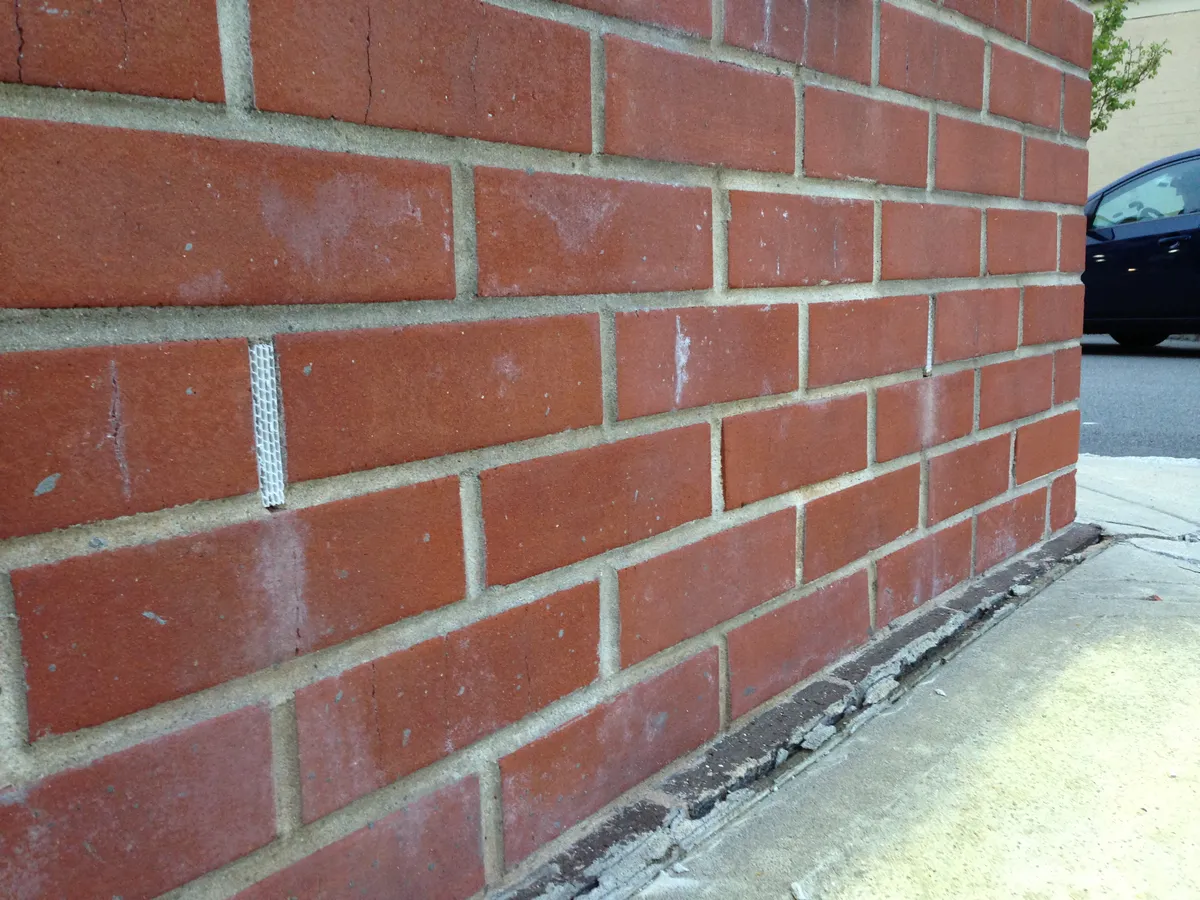
- › Wikimedia Commons: Weep holes with plastic grid inserts (z22, CC BY-SA 3.0)
- › Wikimedia Commons: Open stootvoeg (Erik Wannee, CC0)
Further reading
- Series guide The Complete Guide to Cavity Wall Ventilation
Why a cavity wall has to be able to breathe, where the moisture comes from, why damp walls quietly waste heat, and how to keep a cavity dry and drained: a plain-English hub for homeowners, builders and surveyors.
- Industry Standards NHBC Cavity Wall Ventilation Requirements: A Practical Guide
What NHBC guidance says about weep holes in cavity walls, why damp walls lose more heat, and how to keep weep vents clear. Written for homeowners, builders and developers.
- Awaab's Law Measuring Awaab's Law Compliance: Metrics and Monitoring
How social landlords can measure Awaab's Law performance: metrics for the 24-hour and 10-working-day timescales, dashboards, sensors and records.
Useful pages
- Active Weep Vent →
The wind-powered weep vent with a removable insert you can inspect and keep clear.
- How cross-ventilation works →
Where cavity moisture comes from and why airflow, not sealing, is what keeps a wall dry.
- Installation guide →
Fitting both vents, with spacing based on NHBC guidance.
- Weep vent calculator →
How many weep vents your home needs, using Approved Document C and NHBC spacing, and what they cost.
A weep vent that works with the wind
The Active Weep Vent drains and ventilates the cavity, with a removable insert so it is quick to check and clear. Patent pending. Packs of 10, 50 and 100.